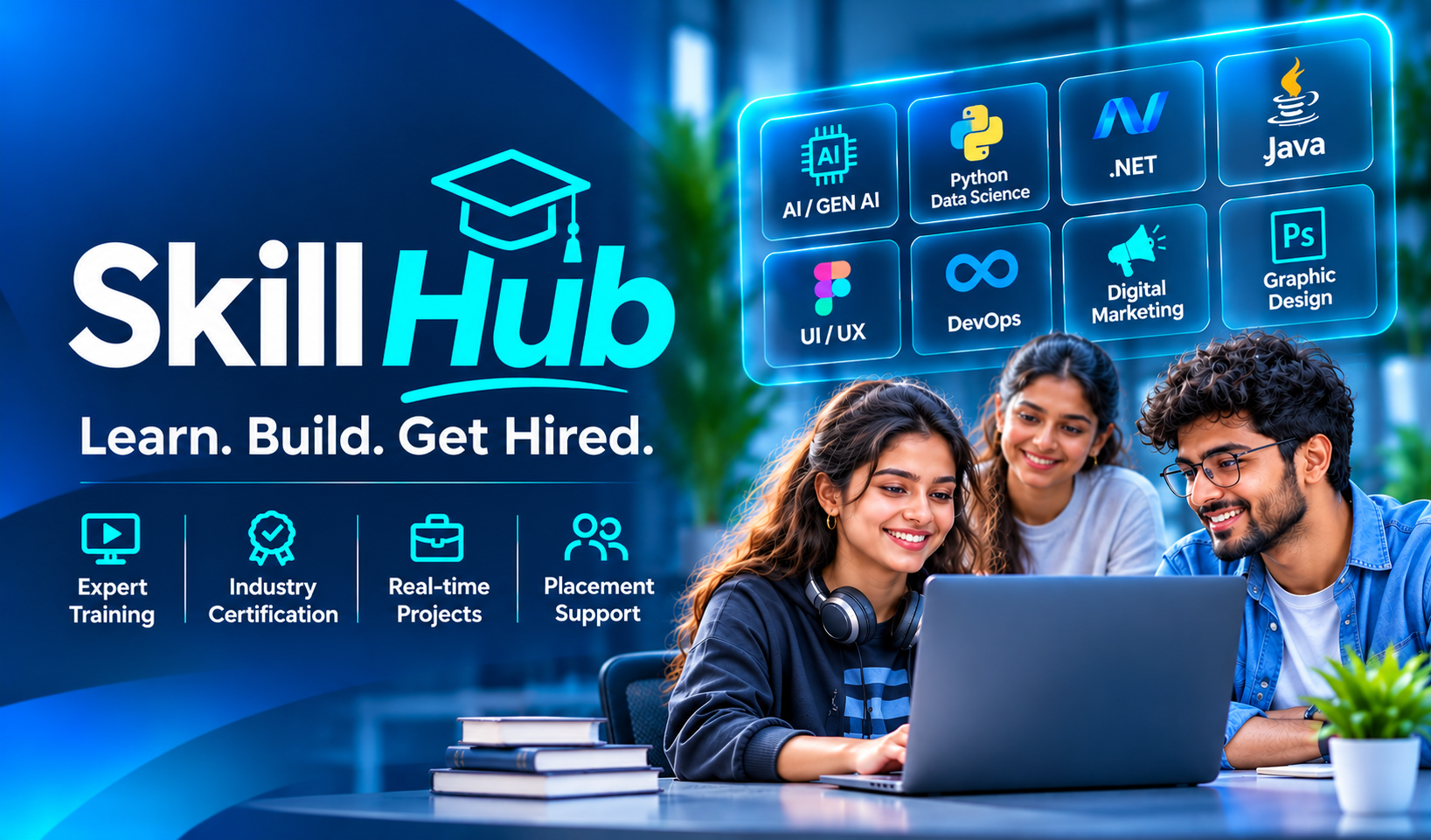
Investing in Your Workforce: How Skill Hub Bridges the Gap Between Learning and Real-World Execution
Technology moves faster than traditional syllabi and one-off workshops. New frameworks, cloud-native architectures, and AI workflows reshape how teams ship software every quarter—yet many organizations and learners still struggle to turn theoretical knowledge into dependable day-to-day execution.
When teams learn in isolation from real engineering standards, code reviews, and production workflows, onboarding slows down and delivery bottlenecks appear. Closing that gap requires structured, hands-on capability building tied directly to how modern products are built.
1. Why Hands-On Skill Building Matters Now
Watching tutorials or memorizing definitions rarely prepares someone for debugging an API, tuning a data pipeline, or shipping a responsive application under real deadlines. Practical skill development focuses on:
Applied problem-solving: Working through realistic scenarios, architecture trade-offs, and end-to-end build-and-test cycles.
Current industry stacks: Practicing on the tools, languages, and workflows teams actually use in production environments.
Repeatable habits: Building strong habits around clean code, documentation, security awareness, and collaborative delivery.
2. Core Technical Capabilities in High Demand
Whether an organization is upskilling internal staff or preparing emerging talent for engineering roles, foundational and specialized tracks reinforce each other:
AI & Machine Learning: Moving from experimentation to practical automation, model evaluation, and intelligent workflows that solve concrete business problems.
Data Science: Turning raw operational and customer data into clear metrics, forecasting, and actionable insights.
Full Stack Web Development: Connecting intuitive front-end interfaces with reliable back-end services, databases, and deployment pipelines.
Mobile & App Development: Crafting fast, accessible experiences that keep users connected across devices.
3. Aligning Talent Growth with Business Outcomes
Workforce development delivers the strongest return when it connects directly to team roadmaps rather than existing as a standalone checklist. Clear milestones, practical mentorship, and project-based checkpoints help learners build confidence while giving leaders visibility into readiness across teams.
How Skill Hub Supports Growth at Hippoclouds
Through Skill Hub at Hippoclouds, workforce enablement sits right alongside real-world product engineering and enterprise consulting across AI & ML, Data Science, Full Stack Web Development, and App Development. Connecting structured skill paths with hands-on technical execution helps individuals grow practical capabilities while enabling organizations to build resilient, future-ready teams.
Practical Steps to Strengthen Your Skill Roadmap
1.Anchor learning to real deliverables: Pair every concept or module with a tangible build, analysis, or workflow improvement.
2.Focus on fundamentals first: Strong core engineering, data literacy, and problem decomposition make adapting to new AI and cloud tools far easier.
3.Review and iterate regularly: Treat skill growth like product iteration—measure progress against real tasks and adjust where friction shows up.